


State Police in Nigeria: The Amendment Is the Easy Part
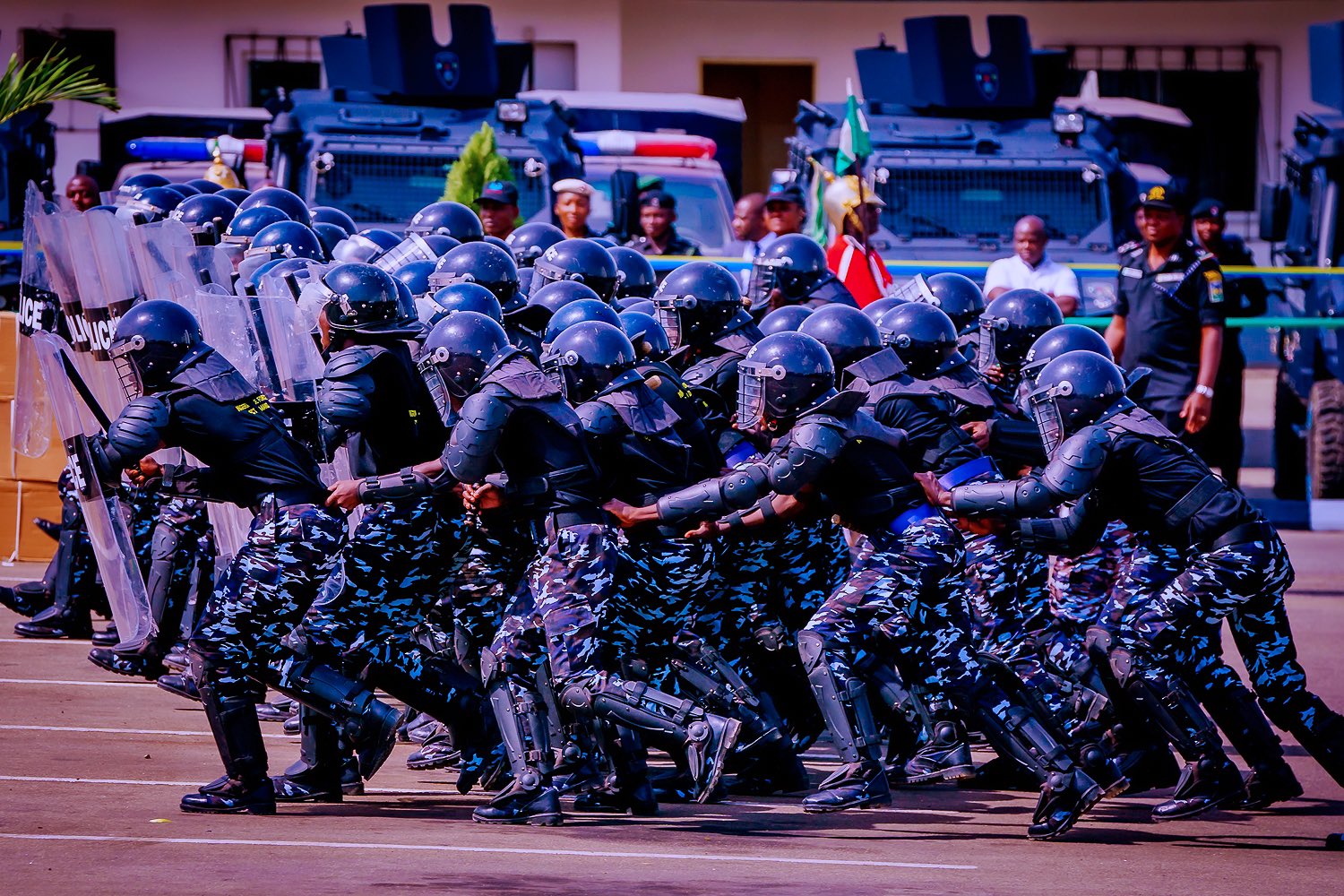
Nigeria’s state police debate has entered a more concrete phase.
In February 2026, President Bola Ahmed Tinubu publicly asked the National Assembly to consider constitutional amendments to provide a legal framework for state police (State House, Feb. 2026). Months earlier, the National Economic Council had received position reports from all 36 governors, with several indicating support for decentralized policing, although the council deferred full deliberation (NEC briefings, 2024).
The political direction is becoming clearer, but the policy design is not, and this distinction is key. Under Section 214 of the 1999 Constitution, the Nigeria Police Force remains the only constitutionally recognized police force. Any move toward state policing therefore depends not just on political agreement, but on a fundamental reworking of Nigeria’s legal and institutional framework.
At the same time, the pressure on the current system is well established. One widely reported estimate from the National Bureau of Statistics suggested that Nigerians paid up to ₦2.23 trillion in ransom between May 2023 and April 2024, although the figure later became controversial after the report was reportedly withdrawn from the agency’s website. Even so, the broader implication is harder to dispute: insecurity now carries a measurable economic cost for households.
In parts of the country, this strain is visible in how states have turned to informal or auxiliary security arrangements to fill operational gaps. These responses reflect urgency, but they also underline the absence of a coherent, legally backed framework for decentralized policing. Yet creating state police on its own will not resolve that problem.
Experiences from other climes
Comparative experience suggests that the effectiveness of decentralized policing depends less on the decision to devolve authority and more on how that authority is structured and constrained.
 India provides a useful reference point. Under its Constitution, policing and public order fall within the jurisdiction of state governments. However, the central government retains important coordinating roles, including the ability to deploy federal forces when necessary. Decentralization in this context does not imply a withdrawal of federal authority; it reflects a shared system with national standards.
Even within that structure, institutional challenges remain. India’s police reform debates have consistently focused on political interference in appointments, postings, and transfers. Reform proposals have therefore emphasized fixed tenure for senior officers, independent state-level oversight bodies, and formal complaints mechanisms.
For Nigeria, the implication is straightforward. Without safeguards around appointments and tenure, decentralization risks shifting political control over policing from the federal level to the states, rather than reducing it.
 Germany offers a different model. Policing is largely handled by the Länder (states), while federal policing responsibilities are narrowly defined, covering areas such as border protection, railway security, and certain national-level threats. This clearer division of roles reduces overlap and limits institutional conflict.
That distinction matters for Nigeria’s current debate, which often frames the issue as a broad transfer of power rather than a careful allocation of functions.

The lesson here is less about decentralization of control and more about decentralization of scrutiny.
Taken together, these examples suggest that Nigeria’s conversation may be focusing too heavily on constitutional amendment as an endpoint, rather than as a starting point. The amendment is necessary, but it is not sufficient.
The Questions That Will Decide the Outcome
The more difficult questions are institutional in nature:
- Who will appoint and remove state police leadership, and under what constraints?
- How will state policing be financed, particularly in states with limited fiscal capacity?
- Which functions will remain exclusively federal, and how clearly will those responsibilities be defined?
- What mechanisms will ensure independent oversight beyond internal disciplinary systems?
These are not secondary considerations; they are central to whether the system will function as intended.
International guidance reinforces this point. The United Nations Office on Drugs and Crime has emphasized that effective policing depends not only on internal discipline, but also on external accountability, including civilian oversight and accessible complaints systems.
Nigeria’s debate is now at a stage where these details matter more than general positions.
Moving Beyond the Amendment
Framing state police as either a solution or a risk obscures the more relevant question. It can be both, depending on how it is designed.
A decentralized system has the potential to improve responsiveness, strengthen local intelligence, and align policing more closely with community realities, but these outcomes are not automatic. They must be built into the system.
At a minimum, this means establishing independent state-level police service commissions insulated from executive overreach; guaranteeing fixed tenure for operational leadership to reduce political interference; clearly defining federal and state policing responsibilities to avoid overlap; and creating credible, civilian-led oversight mechanisms that extend beyond internal disciplinary processes. Just as critical is the question of financing, without predictable and ring-fenced funding, even well-designed institutions will struggle to function.
The constitutional amendment may open the door, but it will not determine what follows.
What happens next will depend on whether Nigeria treats institutional design with the same urgency as political agreement. Without that discipline, decentralization risks reproducing existing weaknesses at a different level of government. With it, state policing could become a meaningful reform rather than a symbolic one.