

The Challenge of Defining Poverty in Tax Policy
In tax debates, the word “poverty” is often used as a moral signal rather than treated as an economic condition that can be measured, assessed, and planned around. Yet poverty is not an abstract concept. It has established benchmarks that inform fiscal, social, and development policy across countries. When tax systems fail to engage seriously with these benchmarks, the result is not just weak optics, but weakened policy design.
International institutions such as the World Bank and the International Monetary Fund rely on income-based thresholds to define poverty and extreme poverty. These thresholds are adjusted for purchasing power and cost of living, recognizing that survival needs vary across contexts. While imperfect, they offer a consistent reference point for evaluating whether income levels are sufficient to meet basic needs.
Under prevailing international benchmarks, individuals earning the equivalent of roughly ₦1.6 million per year or less may still fall within extreme poverty classifications, depending on local price dynamics. This comparison becomes instructive when placed alongside Nigeria’s personal income tax framework.
Nigeria operates a progressive tax system. Under current provisions, individuals earning up to ₦800,000 per annum are exempt from personal income tax. This exemption is an important design feature and reflects an explicit attempt to protect low-income earners within the formal tax structure.
The policy question is not whether this exemption exists, but whether its real-world value remains aligned with economic conditions.
An annual income of ₦800,000 translates to roughly ₦66,000 per month. In today’s Nigeria, this level of income is quickly absorbed by basic necessities such as food, transportation, and housing. Healthcare costs, education expenses, and savings remain largely out of reach at this threshold. While the tax system appropriately exempts these earners, the narrow margin between exemption and taxation raises questions about how quickly households move from subsistence to tax liability.
This is not an argument for Nigeria to mechanically adopt global poverty lines. National context matters. Living costs, consumption patterns, and labour market structures differ. However, international benchmarks provide a useful lens for assessing whether tax thresholds meaningfully distinguish between income that sustains life and income that reflects genuine capacity to contribute.
The issue becomes more pronounced in an inflationary environment. Rising food prices, energy costs, and transport expenses steadily erode purchasing power, particularly for low-income households. When exemption thresholds remain static in nominal terms while living costs rise, their protective value weakens over time, even within a progressive system.
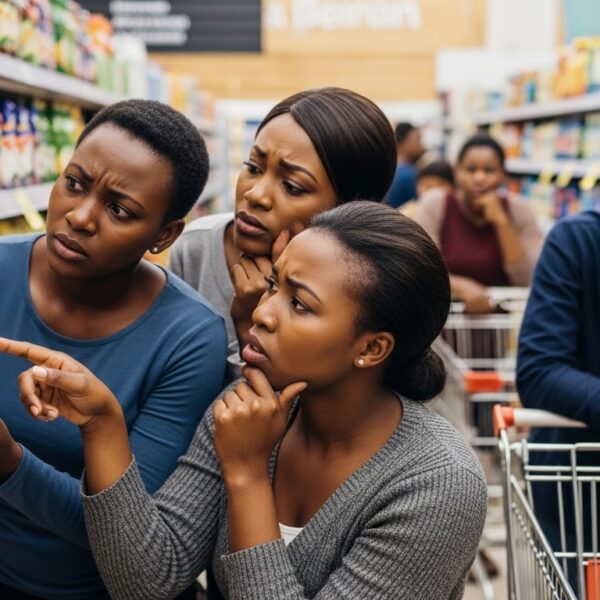
It is also important to recognize that low-income Nigerians already contribute significantly to public revenue through indirect taxes and levies embedded in everyday transactions. The question, therefore, is not whether they contribute at all, but whether personal income tax policy adequately accounts for subsistence realities when defining liability thresholds.
Well-designed tax systems tend to anchor exemptions to minimum living standards, review thresholds periodically, and communicate these choices clearly. Doing so strengthens policy credibility and helps sustain compliance.
Defining poverty accurately within tax policy is not a rhetorical exercise. It shapes who is protected, who pays, and how reform is perceived by those already under economic strain.