

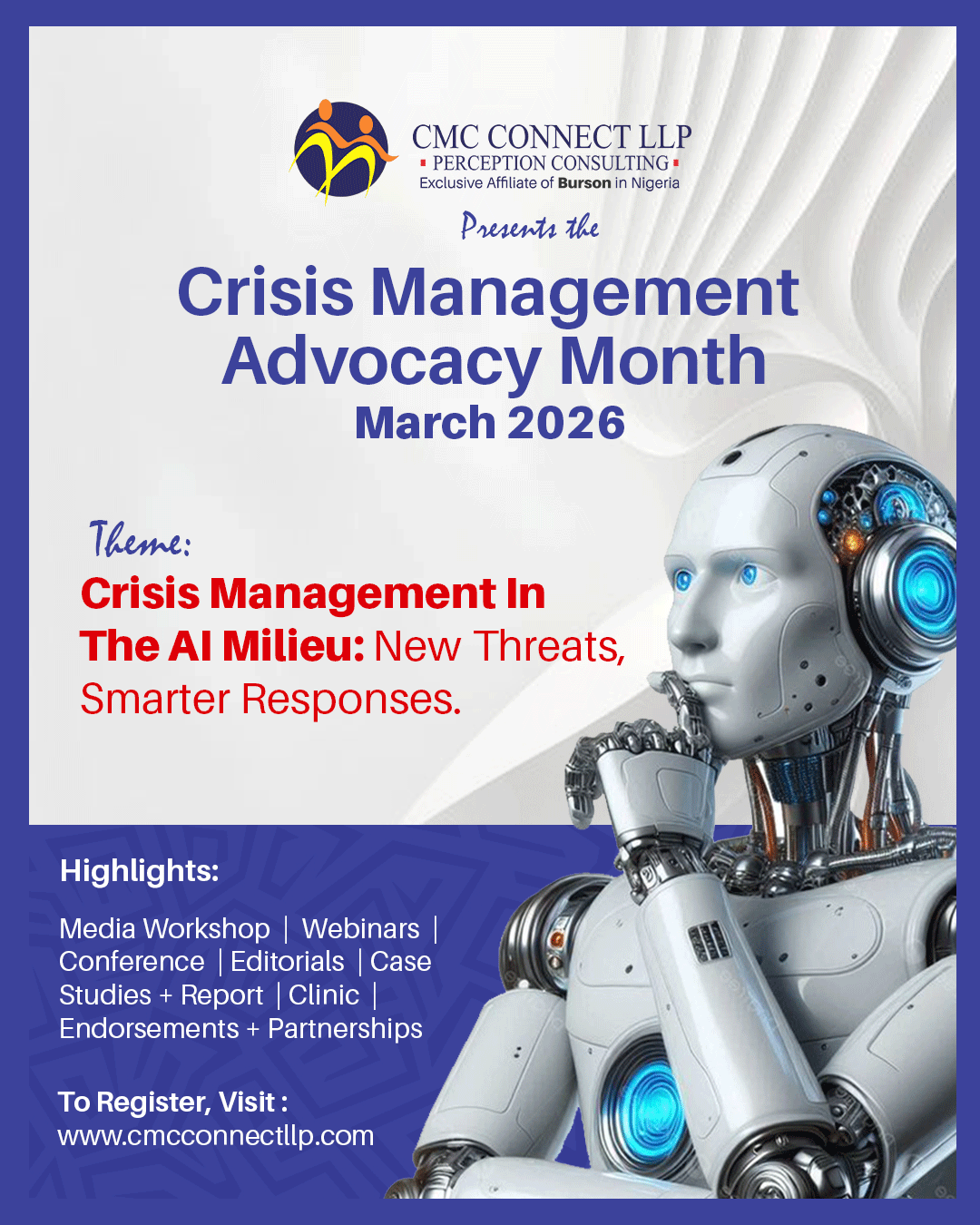
Using Artificial Intelligence to Build Resilient Crisis Communication
Our reality is defined by the unprecedented speed of information and the omnipresence of digital channels. In this environment, crisis communication has evolved far beyond press releases. Crises now slips in and ripple instantaneously across social media, news platforms, and organizational networks. In such a landscape, reactive and siloed communication models are insufficient. When thoughtfully integrated, Artificial Intelligence (AI) enables organizations to transform crisis communication into systems that are anticipatory, precise, resilient, and deeply human-centered.
At its core, resilient crisis communication is about three interwoven elements: timeliness, accuracy, and trust. Timeliness ensures that critical information reaches stakeholders before misinformation takes hold. Accuracy guarantees that the messages are consistent, coherent, and reflective of the real-world conditions. Trust, which is the most delicate of all, determines whether stakeholders will accept guidance, remain calm, and take recommended actions.
The first domain in which AI demonstrates its transformative potential is data analysis and predictive intelligence. Artificial intelligence solely relies on data. It ability to generate vast amounts of structured and unstructured data from social media posts, sensor feeds, news reports, and internal organizational communications all contributes to an overwhelming information landscape.This data is then processed in real time using AI-powered natural language processing (NLP) and machine learning algorithms, thereby identifying emerging trends, sentiment shifts, and potential flashpoints long before they escalate into full-blown crises.
For example, sentiment analysis tools can detect spikes in public anxiety around a product or service, prompting early communication interventions that can succesfully mitigate panic. Similarly, AI algorithms can flag unusual patterns in operational data, enabling proactive messaging that reassures stakeholders and provides actionable guidance for the organization or person.
Beyond detection, AI enhances message precision and personalization, a critical factor required in maintaining trust during high-stakes crisis disruption. One-size-fits-all communication will often fail in crisis communication, because stakeholders’ perceptions, concerns, and information need will always differ. AI-driven segmentation will allow organizations to tailor messages for specific audiences, considering demographic, behavioral, and psychographic variables.
Chatbots and AI assistants can provide immediate, individualized responses, ensuring that employees, stakeholders, customers, and the public receive relevant information without delay. Importantly, these tools operate at scale, maintaining consistency across multiple channels, social media, email, websites, and mobile apps, without the delays and errors inherent in purely human-managed communication systems.
A critical but frequently overlooked aspect of crisis communication is monitoring and correcting misinformation. In today’s hyperconnected environment, false narratives can and will spread rapidly, often outpacing official organizational update or narrative correction. The use of AI can serve as a first line of defense against this dynamic. Advanced NLP systems can scan online platforms for keywords, phrases, and semantic patterns associated with misinformation.
By flagging these trends, AI can enable communication teams to respond quickly with facts, preventing minor inaccuracies from escalating into widespread misconceptions. Furthermore, predictive AI models can anticipate the types of misinformation likely to emerge in specific crisis scenarios, allowing organizations to preemptively craft clarifying messages. This proactive approach not only preserves credibility but also reinforces stakeholder trust, a resource far more valuable than any short-term tactical advantage.
While AI brings remarkable technical capabilities, the human dimension remains paramount. Successful crisis communication relies on empathy, ethical judgment, and cultural sensitivity, areas where AI alone is insufficient. Integrating AI requires a symbiotic human-AI framework: humans interpret the context, make value-driven decisions, and calibrate the tone of communication, while AI handles data processing, pattern recognition, and operational scalability. For instance, an AI system might detect a surge in negative sentiment regarding a company policy, but human communicators decide whether to issue an apology, provide additional context, or implement structural changes. This partnership ensures that AI-driven efficiency never comes at the cost of authenticity or relational depth.
Another powerful application of AI is scenario simulation and preparedness training. AI models can simulate a range of crisis scenarios, from cyber intrusions to natural disasters, modeling the flow of information, public reactions, and organizational bottlenecks. These simulations help teams understand potential communication breakdowns, optimize messaging sequences, and test different strategies before a real crisis occurs. Over time, AI can learn from each simulation, refining its predictive accuracy and offering actionable insights to improve both reactive and proactive communication planning. However, the integration of AI into crisis communication is not without challenges. Data privacy concerns, algorithmic bias, and over-reliance on automated systems are real risks. Organizations must adopt transparent AI governance frameworks, continuously audit their outputs, and maintain human oversight to ensure ethical and equitable communication.
Ultimately, AI in crisis communication is about amplifying human capability rather than replacing it. As crises become more complex, rapid in evolution and multi-dimensional, the organizations that will endure are those that combine technological foresight with human wisdom, empathy, and ethical clarity. In this sense, AI is not just a tool; it is your strategic ally in cultivating communication systems that are resilient, responsive, and profoundly human.
As the digital landscape continues to accelerate, the future of crisis communication will belong to those who embrace this synthesis. By understanding and leveraging AI’s capabilities within a human-centered framework, organizations can transform crises into opportunities.
AI is not here to displace human communicators it is here to strengthen their foresight, refine their reach, and elevate the integrity of their messaging.
Author: Bright Emmanuel Okon.