

Beyond June 30: Why Africa Must Rethink Migration Governance
What South Africa’s xenophobic crisis reveals about the future of African integration

South Africa’s president vows to crack down on corruption
Africa’s integration agenda has long been built on an ambitious promise: that Africans should be able to move, trade, work, invest and build lives across the continent with fewer barriers. From the African Union’s Agenda 2063 to the African Continental Free Trade Area (AfCFTA), the vision has been clear, a more connected and economically integrated Africa. Yet the events that unfolded in South Africa in June 2026 exposed an uncomfortable reality. While Africa has made significant progress in opening borders for trade and mobility, it has invested far less in protecting the Africans expected to cross those borders.
The anti-immigrant mobilization that culminated around the June 30 deadline was more than another episode of xenophobic violence. It evolved into a regional diplomatic and humanitarian concern, prompting several African governments, including Nigeria, to facilitate the voluntary return of affected citizens while engaging South African authorities through diplomatic channels. The crisis demonstrated that what begins as a domestic security challenge can quickly become a continental issue with implications for diplomacy, investment, labour mobility and regional cooperation.
The immediate triggers of the crisis are well documented. South Africa continues to grapple with one of the highest unemployment rates in the world, with youth unemployment exceeding 40 percent, alongside persistent inequality, poverty and uneven service delivery. These structural challenges have created fertile ground for frustration, particularly in low-income communities where competition over jobs, housing and informal economic opportunities is most intense. Political rhetoric, misinformation and organized anti-immigrant mobilization have further reinforced the perception that foreign nationals are responsible for many of these challenges.
These frustrations should not be dismissed. Every government has a legitimate responsibility to regulate immigration, enforce its laws and protect the interests of its citizens. However, there is an important distinction between lawful immigration enforcement and vigilantism. When citizen-led movements assume responsibility for identifying, intimidating or forcibly removing foreign nationals, the rule of law is weakened and social cohesion begins to erode. Migration policy cannot be outsourced to mobs.
Perhaps the greatest lesson from the current crisis is that Africa’s migration challenge is increasingly a governance challenge. The evidence suggests that migrants are often blamed for problems rooted in structural economic conditions, governance deficits and weak public institutions. In this sense, xenophobia is not merely a product of migration. It is frequently a symptom of deeper state and governance pressures.
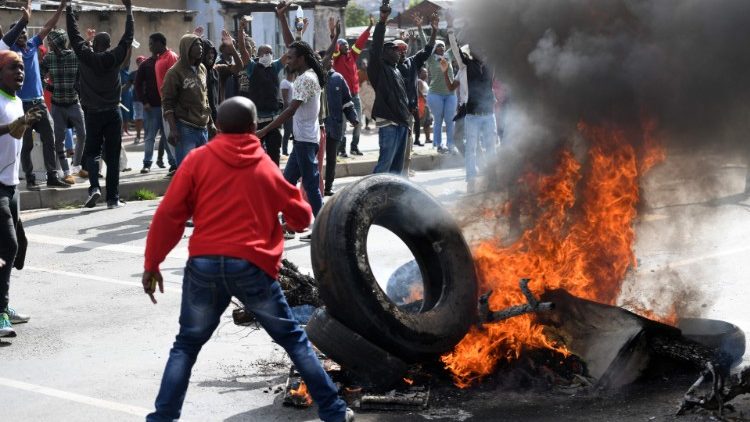
SA Xenophobia riot on the streets of Johannesburg
This is where the conversation must move beyond South Africa. The crisis has exposed a contradiction at the heart of Africa’s integration agenda. The continent has developed increasingly sophisticated frameworks to facilitate trade, investment and the movement of people. Yet the institutional mechanisms responsible for protecting Africans once they move across borders remain fragmented and largely reactive.
SOUTH AFRICA Incidents of xenophobia within the South Africa
This challenge extends beyond South Africa. Across parts of the continent, there have been persistent reports of African migrants facing exploitation, abuse, trafficking, and other serious human rights violations. For example, documented cases have revealed that some migrants travelling from West Africa through North African transit routes, particularly in countries such as Libya, have been subjected to modern slavery, forced labour, arbitrary detention, and human trafficking. There have also been reports of migrant domestic workers in parts of North Africa and the Middle East experiencing severe exploitation under abusive employment arrangements. Nigerian women and girls, among others, have been disproportionately targeted by trafficking networks, with many forced into sexual exploitation, while others have disappeared or lost their lives with little accountability or justice for their families.
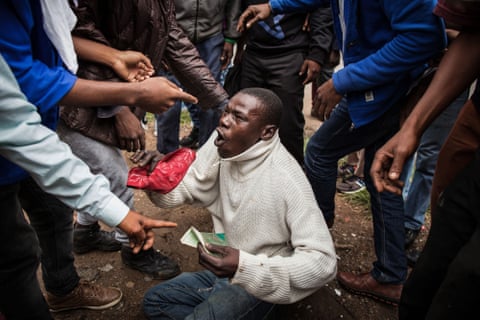
Documenting violence against migrants in South Africa
These realities underscore the urgent need for stronger continental cooperation, not only to promote the movement of people, but also to guarantee their safety, dignity, and fundamental human rights wherever they reside or work in Africa.
This contradiction matters because Africa’s integration project depends not only on markets but also on people. AfCFTA is expected to stimulate investment, encourage entrepreneurship and expand regional value chains. These ambitions assume that African professionals, traders, students and entrepreneurs will increasingly live and work across borders. If mobility becomes associated with fear, insecurity and periodic evacuation, the economic promise of integration becomes significantly harder to realize.
Nigeria’s recent evacuation and diplomatic engagement illustrate both the strengths and the limitations of current approaches. The government’s efforts demonstrated an important commitment to citizen protection during a rapidly evolving crisis. However, emergency repatriation should not become the benchmark of success. Success should be measured by Africa’s ability to prevent such crises from escalating in the first place.
The growing involvement of multiple African governments also signals an important shift. What began as a domestic issue has evolved into a continental governance challenge requiring collective solutions. This is precisely the type of challenge the African Union was established to address. Yet existing regional institutions remain better equipped to promote mobility than to safeguard those who exercise it.
This presents an opportunity for policy innovation. Africa now needs to complement its economic integration agenda with a citizen protection agenda. Rather than treating migrant protection solely as a consular responsibility, the African Union should work with member states to develop a continental framework that strengthens early warning systems for xenophobic violence, improves intelligence sharing on organized anti-immigrant mobilization, establishes coordinated protocols for consular response during crises and promotes public communication strategies that counter misinformation and political scapegoating.
Equally important, governments must address the structural conditions that make exclusionary politics attractive. Sustainable solutions lie not in blaming migrants but in tackling unemployment, inequality, weak local governance and declining public trust. Migration may amplify existing pressures, but it is rarely their root cause. Unless these structural challenges are addressed, similar crises are likely to recur, regardless of how many migrants are removed or how many citizens are repatriated.

SA Xenophobia riot on the streets of Johannesburg
The events surrounding June 30 should therefore be remembered for more than the tensions they produced. They should be seen as a wake-up call for Africa’s integration project. The continent has rightly invested considerable political capital in opening markets and expanding economic cooperation. It must now invest with equal determination in protecting the people expected to drive that integration.
Africa’s integration agenda has advanced faster than its protection architecture. Until those two evolve together, every new wave of xenophobic violence will expose the gap between continental ambition and lived reality. Closing that gap is no longer simply a humanitarian imperative. It is becoming one of the defining policy challenges of Africa’s future.